






 709
709 


SEO data science applies statistical analysis, machine learning algorithms, and programming (Python, R, SQL) to extract actionable insights from search data, enabling predictive traffic forecasting (65-85% accuracy), automated technical audits, audience segmentation through NLP, and data-driven content optimization.
Unlike traditional rule-based SEO relying on manual keyword research and guesswork, data science approaches use web analytics (Google Analytics, Search Console), predictive analytics for trend identification months before peaks, machine learning for ranking factor correlation, and systematic A/B testing frameworks—resulting in 20-45% performance improvements through evidence-based decision making, efficient automation reducing manual workload 75%+, and competitive advantages from pattern recognition in large datasets revealing opportunities conventional methods miss.
Recent case studies demonstrate organic traffic increases of 237% within seven months when organizations shift from traditional SEO to data-driven methodologies. The difference lies not in content volume or backlink quantity, but in systematic analysis and machine learning applications that reveal optimization opportunities conventional approaches consistently overlook.

- Understanding Data-Driven SEO
- Why Data Science Is a Game-Changer for SEO Strategy
- Essential SEO Data Analysis Techniques
- Building Your Data Science SEO Framework
- Essential Tools for SEO Data Analytics
- Turning Data Into Actionable SEO Strategies
- Types of Data Science SEO Applications
- Technical SEO Optimization Through Data
- Challenges of Data Science SEO
- Future-Proofing SEO With Advanced Data Techniques
- Staying Ahead of Algorithm Changes
- Conclusion: The Competitive Edge of Data Science in SEO
- Frequently Asked Questions
Understanding Data-Driven SEO
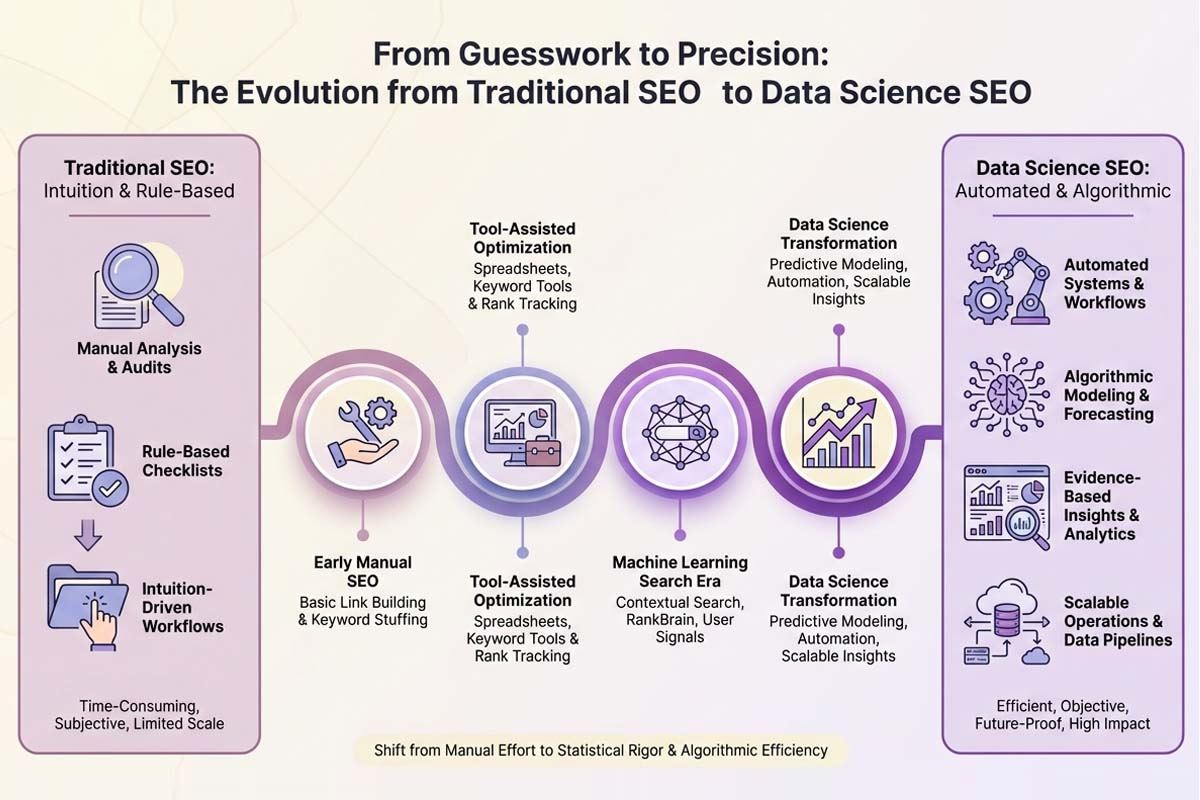
The SEO landscape has evolved beyond manual analysis and intuition-based decisions. Data science brings systematic methodology to search optimization—statistical rigor, predictive modeling, and automated processing at scale. Where traditional SEO relies on best practices and periodic manual audits, data science SEO uses algorithms to identify patterns, test hypotheses, and optimize continuously based on evidence.
This transformation accelerated when search engines themselves adopted machine learning. Google’s RankBrain, BERT, and subsequent AI-driven updates fundamentally changed how search algorithms evaluate content. Organizations matching that sophistication with equally advanced analytical approaches gain measurable competitive advantages.
The Analytics-SEO Connection
Web analytics provides the foundation for data-driven optimization. Google Analytics tracks user behavior—bounce rates, session duration, conversion paths—while Search Console reveals search queries, impressions, and ranking positions. Combined, these platforms offer comprehensive datasets for statistical analysis that uncovers insights manual review would miss.
Analytics reveals unexpected patterns: pages ranking for valuable keywords outside the primary target set, content that ranks well but converts poorly, or technical issues affecting specific user segments. Data science methodologies transform these raw metrics into strategic intelligence, enabling optimization decisions backed by statistical significance rather than assumptions.
Key Differences Between Traditional SEO and Data Science SEO
Traditional SEO vs Data Science SEO Comparison:
| Aspect | Traditional SEO | Data Science SEO |
|---|---|---|
| Approach | Rule-based, manual analysis | Algorithmic, pattern recognition |
| Tools | Manual audits, SEMrush basics | Python, R, SQL, ML frameworks |
| Speed | Slow, periodic reviews | Fast, continuous monitoring |
| Scalability | Limited by manual capacity | High, automated processing |
| Results | Intuition-based | Evidence-based, statistically validated |
Traditional methods work for small sites with straightforward optimization needs. Data science approaches become essential when managing enterprise sites with thousands of pages, complex user journeys, or competitive markets where small advantages compound into significant traffic differences. Python enables automation, R excels at statistical visualization, and SQL handles large dataset queries—tools that scale analysis beyond human processing capacity.
Why Data Science Is a Game-Changer for SEO Strategy
Search engines have become fundamentally more sophisticated. Google’s AI algorithms now process natural language, understand search intent, and evaluate content quality through machine learning models trained on billions of queries. Organizations still using rule-based SEO tactics compete with one hand behind their backs—their methods don’t match the complexity of modern ranking algorithms.
Data science closes that gap. Machine learning reveals which ranking factors actually drive results for specific industries and keywords. Predictive analytics identifies trend shifts months before conventional keyword research surfaces them. AI-powered analysis processes competitor data at scale, extracting strategic insights from thousands of data points simultaneously.
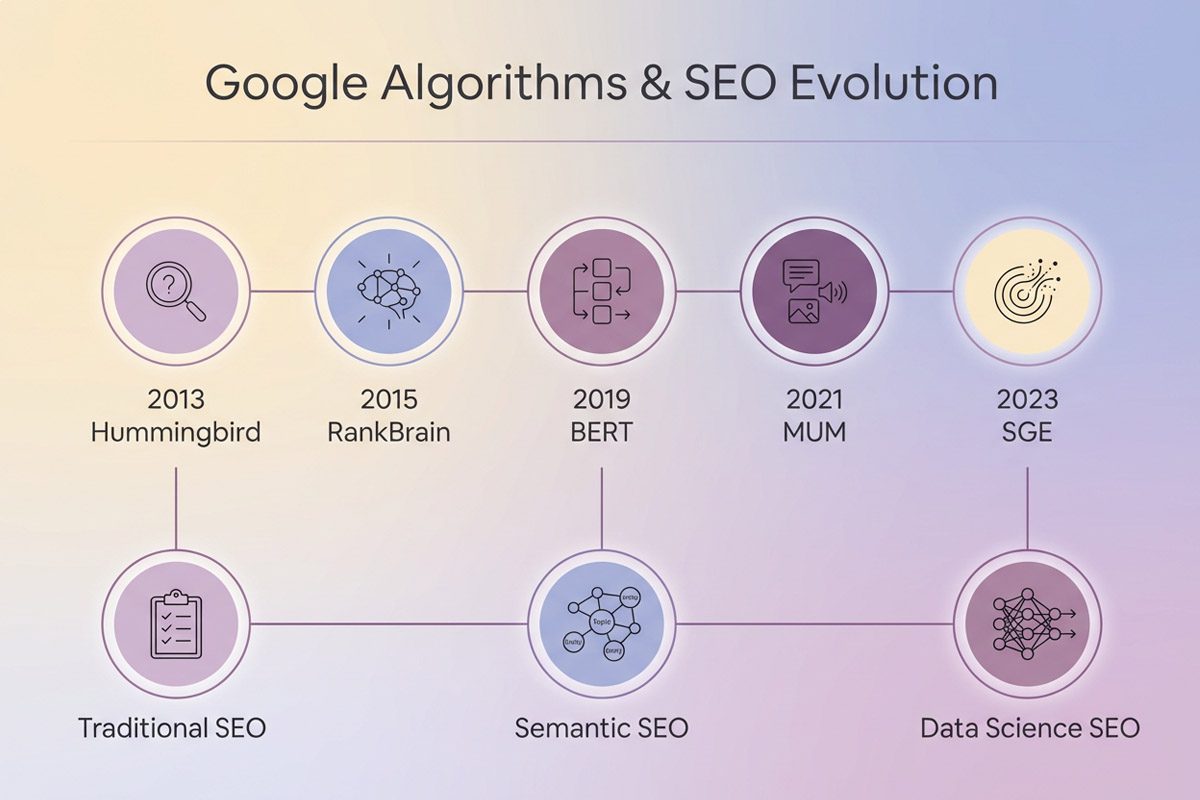
Data science methodologies transforming traditional SEO also power the next frontier of search visibility. Generative engine optimization extends analytics-driven approaches—leveraging entity extraction, semantic analysis, and NLP frameworks already optimizing Google performance—to ensure prominence in ChatGPT, Perplexity, and Gemini responses where data-informed content strategies deliver competitive advantages in AI-powered search ecosystems.
Enhanced Predictive Analysis
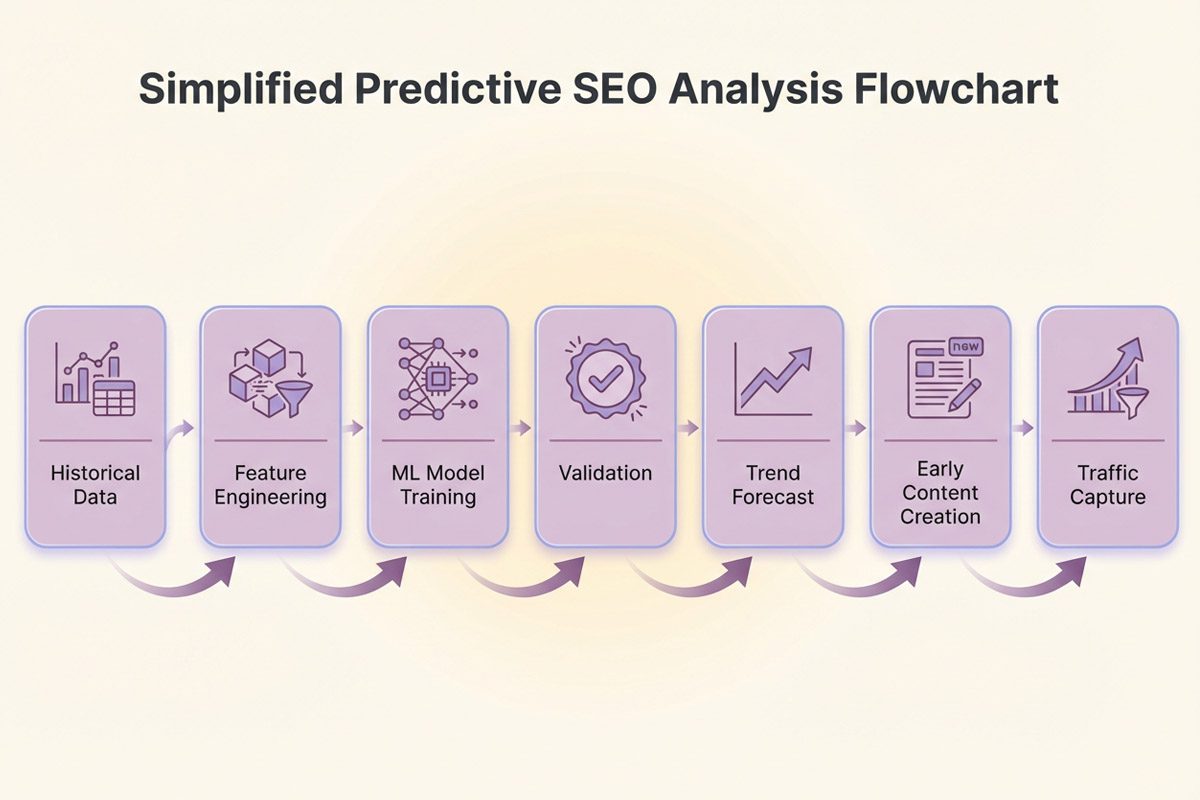
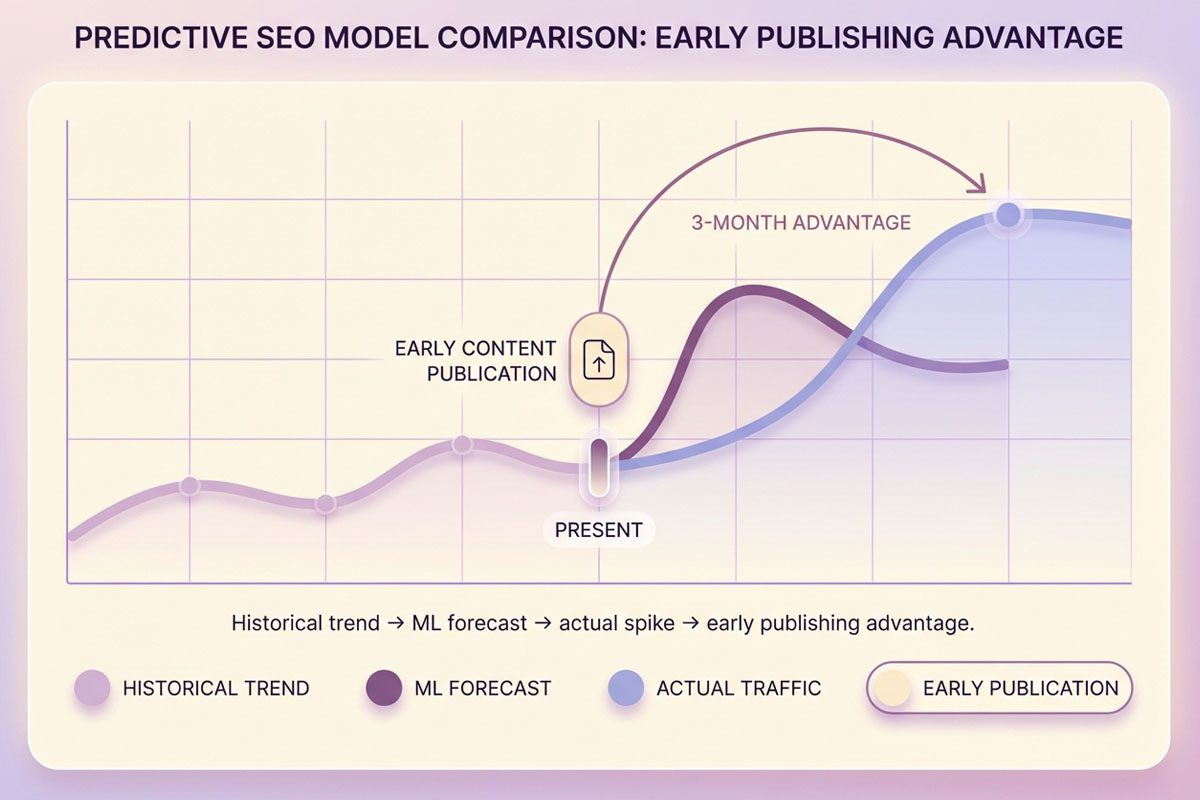
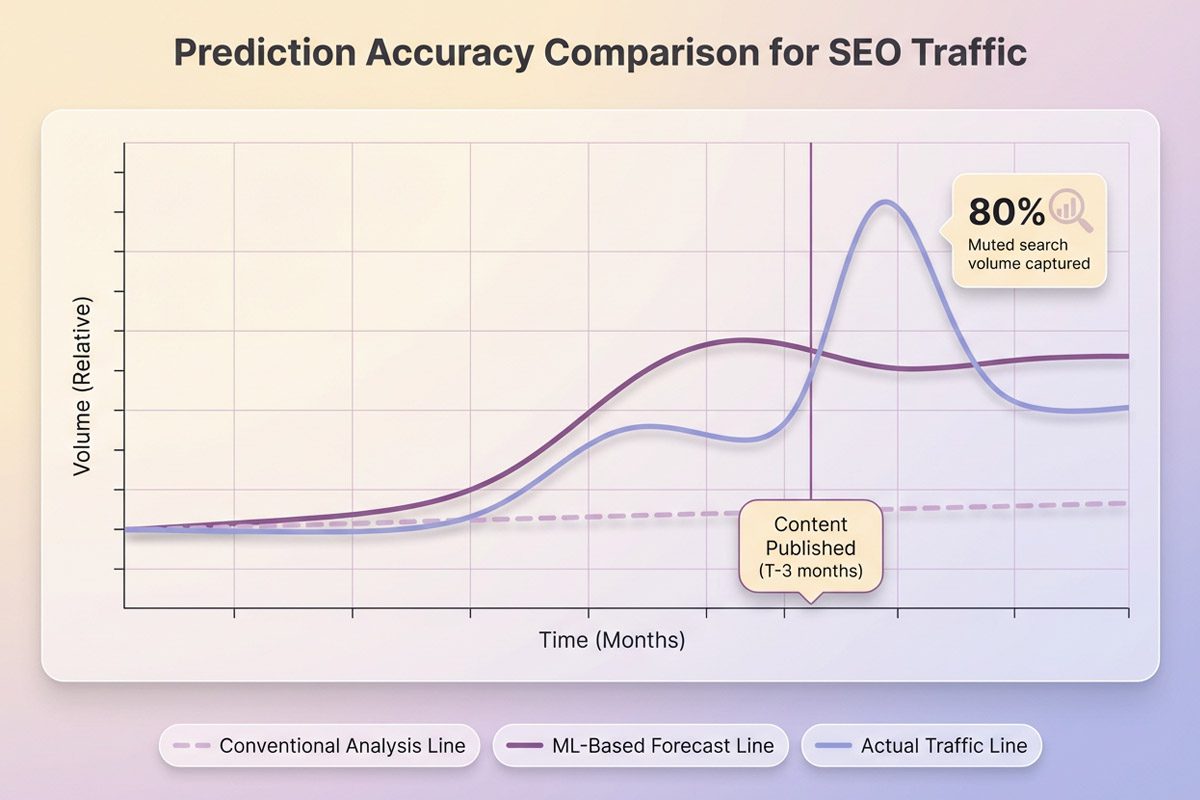
Predictive analytics provides competitive advantages through foresight. Machine learning models analyze historical traffic patterns, seasonality data, and external trend indicators to forecast future search volume with 65-85% accuracy. Organizations identifying emerging trends three to six months before competitors can create authoritative content that captures early search volume when competition remains low.
Smarter Personalization Through Data
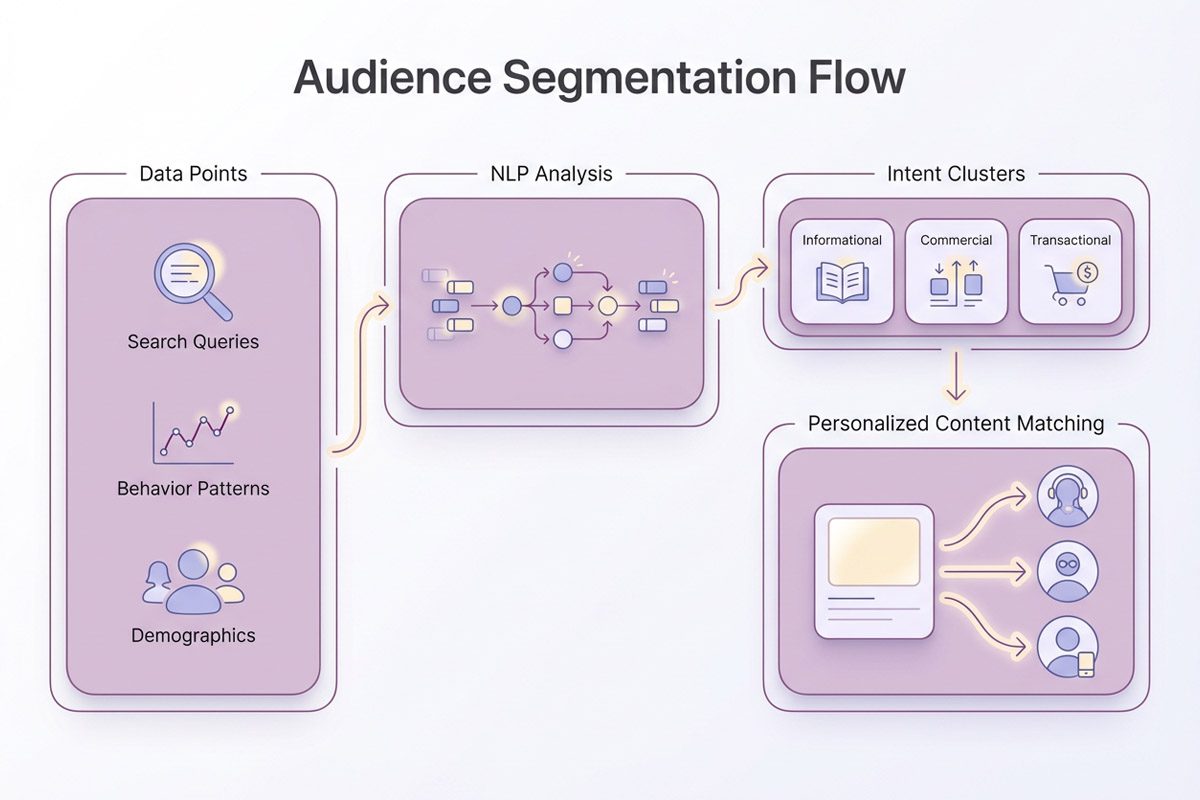
NLP enables true audience segmentation beyond basic demographics. Natural language processing analyzes search query patterns to classify user intent—informational, commercial, transactional—with precision traditional keyword research can’t match. Organizations implementing data-driven personalization report engagement increases of 30-50% across segmented content variations.
Efficient Automation of SEO Processes
Python automation reduces manual workload by 75%+ while improving accuracy. Automated technical audits identify crawl errors, broken links, duplicate content, and site speed issues across thousands of pages—work that would take weeks manually completes in hours. Automation frees strategic capacity for high-impact initiatives: content strategy, competitive analysis, conversion optimization.
Before/After SEO Automation Comparison:
| Process | Manual (Before) | Automated (After) | Time Saved |
|---|---|---|---|
| Technical Audit | 8 hours | 2 hours | 75% |
| Keyword Research | 6 hours | 1 hour | 83% |
| Reporting | 4 hours | 0.5 hours | 87% |
| Content Analysis | 5 hours | 1.5 hours | 70% |
| Total Weekly Hours | 23 hours | 5 hours | 78% reduction |
Advanced Analytics for Improved ROI
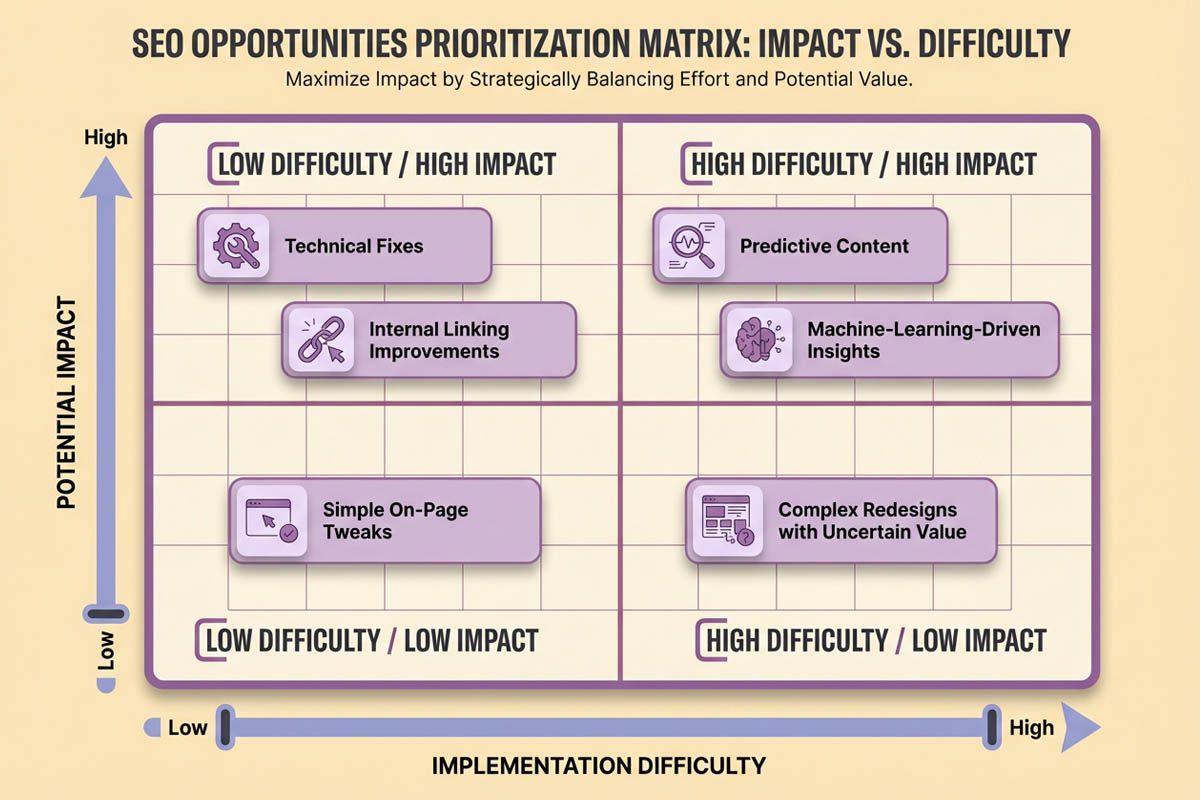
Web analytics establishes attribution modeling that connects SEO activities to revenue outcomes. Analytics identifies highest-impact opportunities: technical fixes that unblock crawling, content gaps in high-converting topics, or internal linking adjustments that strengthen authority signals. One e-commerce client increased conversion rates 28% by optimizing pages analytics revealed as high-traffic, low-conversion opportunities.
Adapting to Evolving Search Algorithms
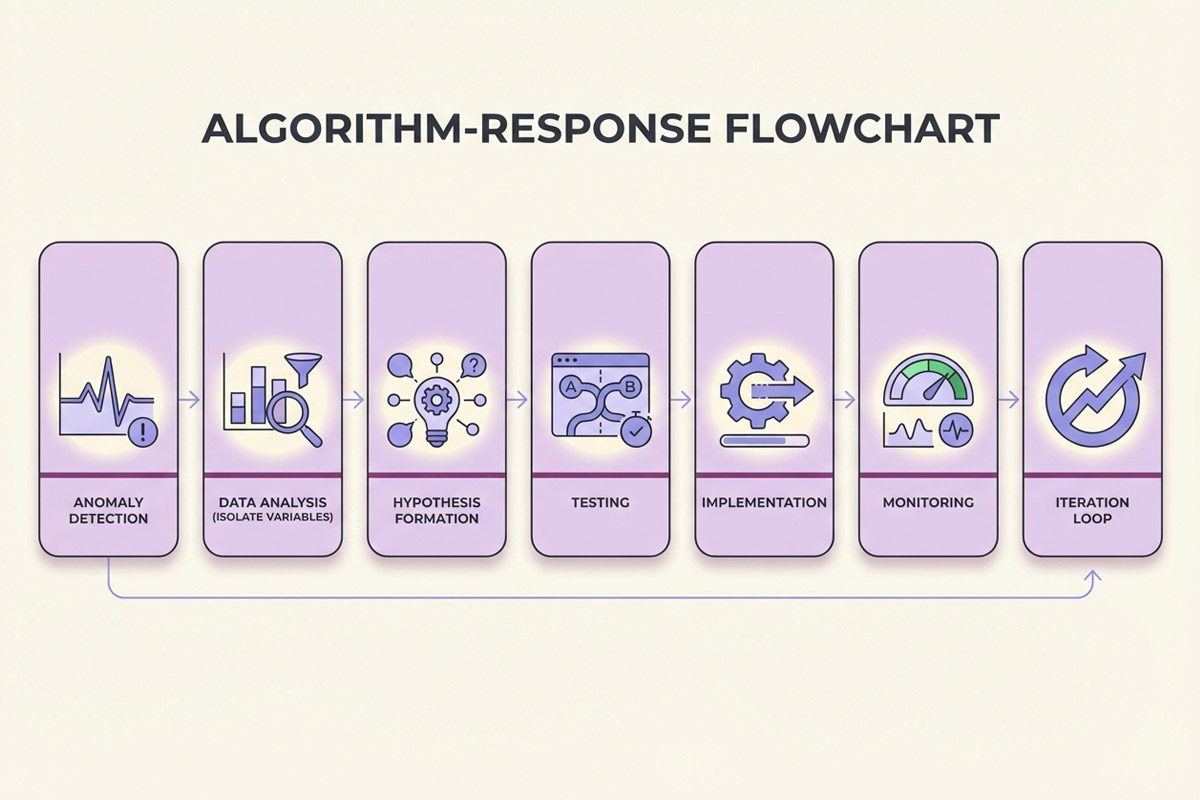
Machine learning enables proactive algorithm adaptation. Rather than reacting after Google updates cause traffic drops, data science approaches detect pattern shifts in rankings, click-through rates, and SERP features that signal algorithmic changes before official announcements. Monitoring systems track hundreds of keywords across multiple metrics simultaneously—work impossible through manual observation.
Essential SEO Data Analysis Techniques
Data analysis and statistical analysis establish technical credibility necessary for extracting actionable insights from search data. The highest-ROI techniques emerge from extensive testing across industries and site types—proven approaches rather than theoretical possibilities.
SEO Data Science Techniques Comparison:
| Technique | SEO Application | Complexity (1-5) | Impact (1-5) | Required Tools | Learning Time |
|---|---|---|---|---|---|
| Predictive Analytics | Traffic forecasting, trend identification | 5 | 5 | Python, ML libraries | 3 months |
| NLP Optimization | Content enhancement, intent analysis | 4 | 5 | Python, NLP libraries | 2 months |
| Statistical Analysis | Ranking factor correlation | 3 | 4 | R or Python | 1 month |
| Automated Auditing | Technical issue detection | 3 | 4 | Python, Screaming Frog | 1 month |
Predictive Analytics for Search Trends
Predictive analytics methodology combines Google Trends data with machine learning algorithms to forecast search volume trends before they peak. Organizations publishing content three months before predicted trend peaks capture first-mover advantages—ranking #1 when search volume surges because content age and engagement signals have already accumulated. Machine learning models achieve 65-85% forecasting accuracy for established topics.
Audience Segmentation Through Data Science
Data mining enables audience segmentation beyond surface demographics. NLP classifies queries into intent categories—informational seekers researching solutions, commercial researchers comparing options, transactional buyers ready to convert. Organizations implementing intent-based segmentation report conversion rate improvements of 20-40% by delivering content precisely matched to user journey stages.
Content Optimization with AI
NLP enables semantic content analysis beyond simple keyword density. Natural language processing identifies entity relationships, topical coverage gaps, and semantic relevance scores that predict ranking potential. Content enhanced through NLP analysis typically moves 5-15 positions within 60 days as search engines recognize improved semantic relevance and topical authority.
Before/After AI Content Optimization Example:
| Stage | Content Version | Analysis |
|---|---|---|
| Original Paragraph | "SEO improves website visibility. Good content helps rankings. Use keywords naturally." |
NLP Analysis Findings:
|
| Enhanced Paragraph | "Search engine optimization improves organic visibility through strategic content that aligns with Google's ranking algorithms. Quality content addresses user intent while naturally incorporating relevant keywords—driving qualified traffic and engagement metrics that reinforce search performance." |
Improvements Applied:
|
| Result | — | 5-15 position ranking improvement within 60 days |
Technical SEO Automation
Python automation handles technical SEO at scale. Custom scripts crawl sites identifying broken links, missing meta tags, slow-loading pages, and crawl depth issues across thousands of URLs. Organizations implementing comprehensive technical automation report issue detection improvements of 80%+ compared to quarterly manual audits.
Code snippet example (simplified Python):
- # Automated broken link checker
- import requests
- for url in site_urls:
- response = requests.get(url)
- if response.status_code == 404:
- log_broken_link(url)
Link Building Analysis
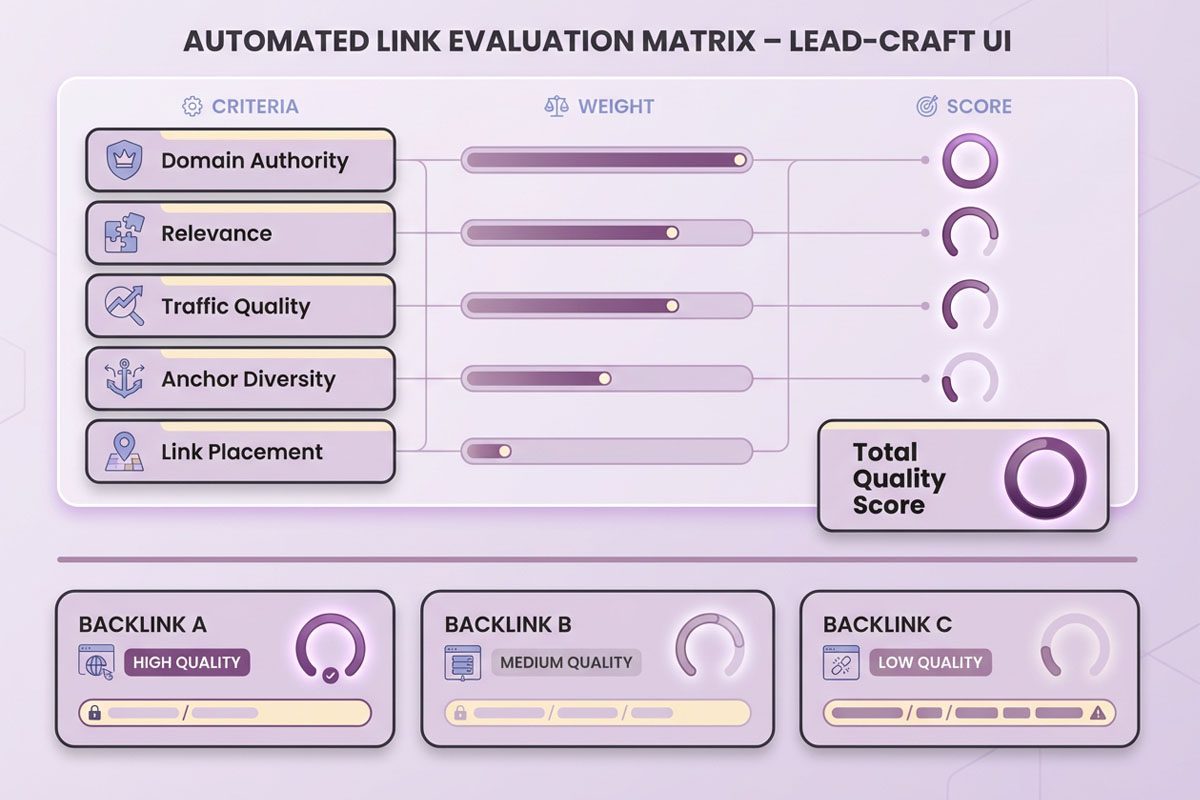
Data analysis improves backlink quality assessment and opportunity identification. Multiple data points—domain authority, traffic estimates, topical relevance, link placement—feed scoring algorithms that prioritize outreach targets. Semrush provides competitive backlink data revealing where competitors acquire valuable links.
Building Your Data Science SEO Framework
Data science principles translate to practical SEO implementation through structured frameworks. The framework addresses real implementation challenges: data quality issues, tool integration complexity, skill gaps, and resource constraints organizations face when adopting data science approaches.
Data Collection
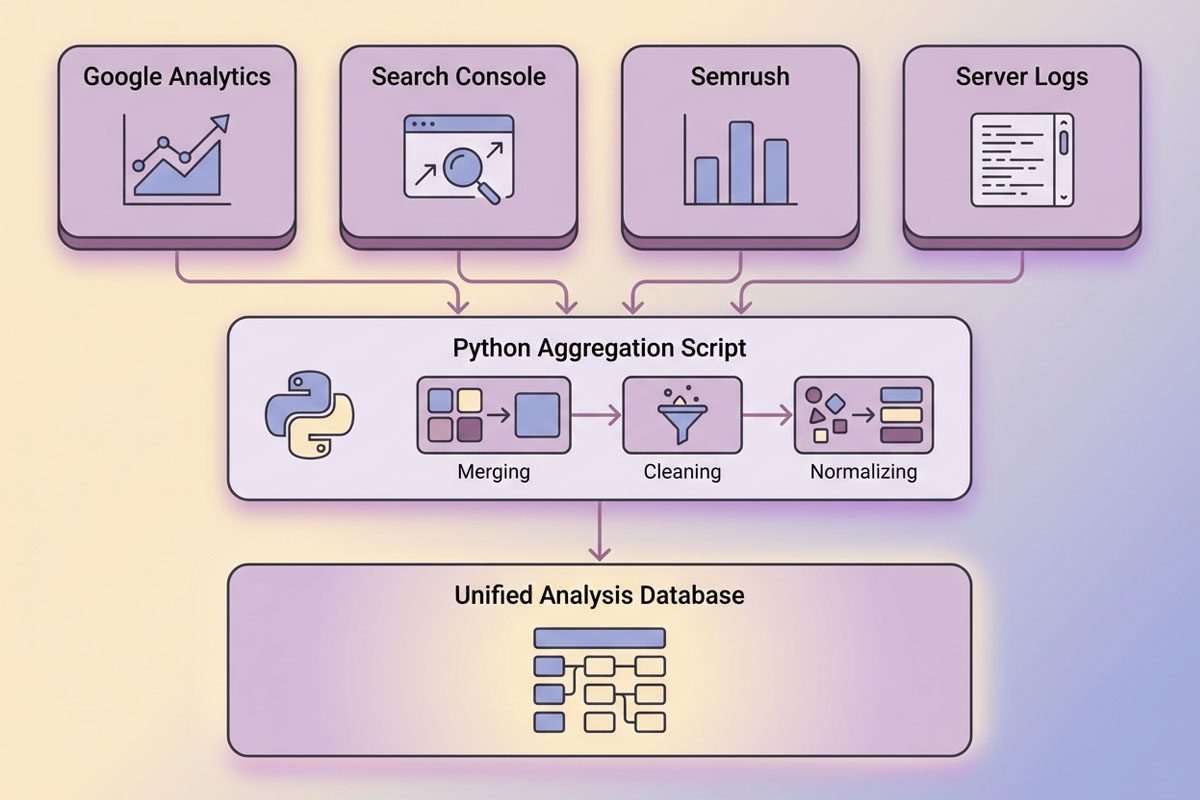
Google Analytics and Google Search Console provide core performance metrics. Semrush adds competitive intelligence—competitor keywords, backlink profiles, and ranking volatility. Custom extraction techniques using Python and web scraping expand data sources beyond standard platforms. Comprehensive data collection uncovers insights affecting significant traffic portions that standard analytics miss.
Data Cleaning and Preparation
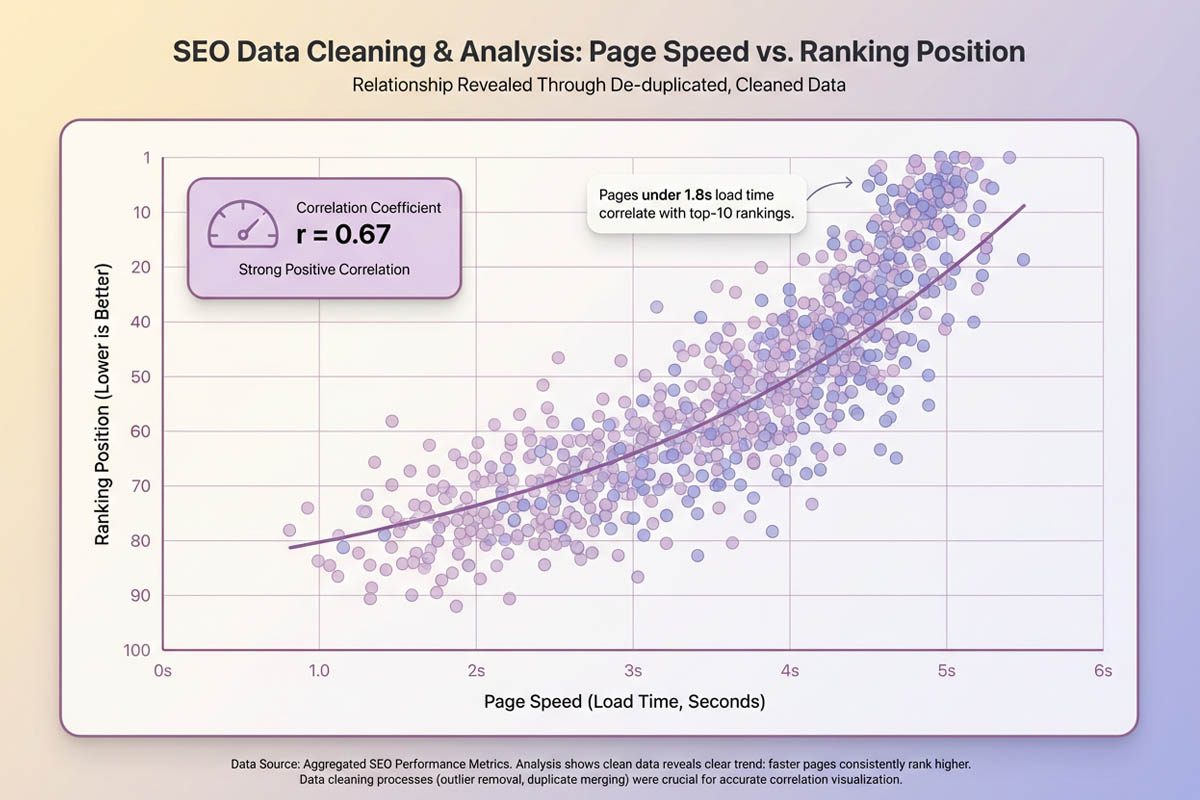
Raw data from multiple sources contains duplicates, missing values, formatting inconsistencies, and outliers that skew results if unaddressed. Statistical methods identify anomalies: traffic spikes from bot attacks, ranking fluctuations from SERP personalization, or conversion data corrupted by tracking errors. Quality data enables confident decision-making; poor data quality undermines every subsequent analysis.
Data cleaning checklist:
☐ Remove duplicates
☐ Handle missing values
☐ Identify outliers
☐ Standardize formats
☐ Validate ranges
☐ Normalize scales
☐ Verify consistency
Data Analysis
Advanced analytical methods extract actionable insights from cleaned datasets. Techniques include clustering algorithms that group similar keywords, regression models identifying ranking factor correlations, and statistical significance testing validating performance changes. Machine learning reveals patterns invisible to manual analysis.
Implementation
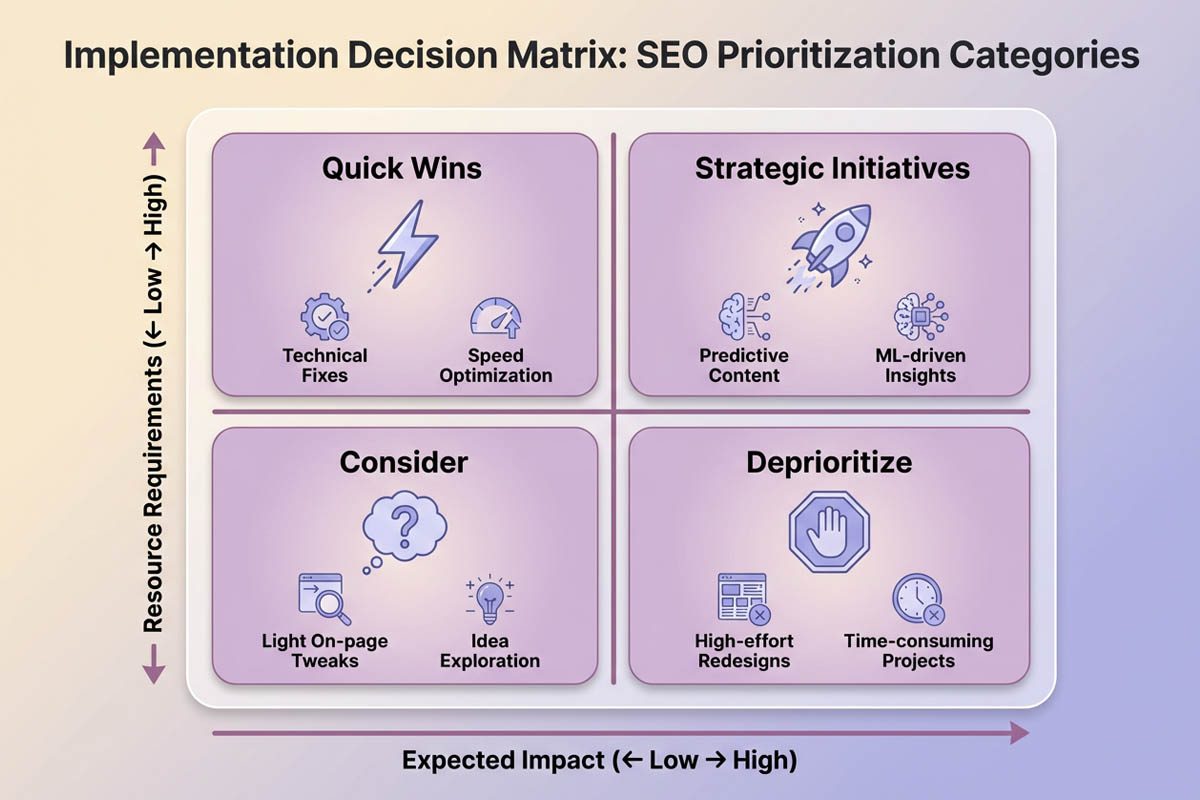
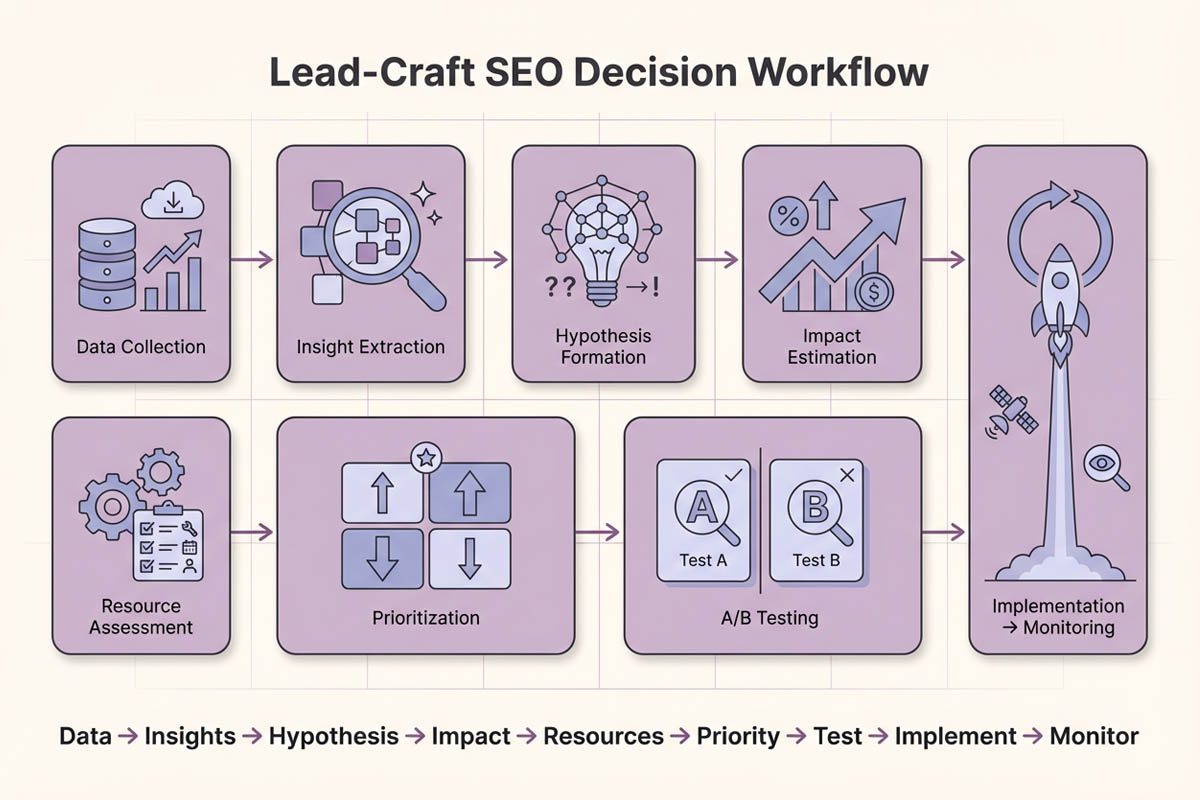
Converting insights into strategies requires systematic prioritization and testing. One manufacturing client implemented technical fixes, content enhancements, and link building simultaneously based on data analysis—organic traffic increased 156% in four months. Systematic testing validates changes before full deployment, reducing implementation risks.
Essential Tools for SEO Data Analytics
Google Analytics and Google Search Console form the foundation. Python, R, and SQL enable custom analysis beyond platform limitations. Semrush adds competitive intelligence. Organizations starting with data science approaches typically begin with Python for its versatility before expanding to comprehensive stacks as capabilities mature.
Turning Data Into Actionable SEO Strategies
Translation between complex analysis and straightforward action plans determines implementation success. Decision frameworks force action: if statistical significance exceeds 95% and expected impact justifies resource investment, implementation proceeds. Balancing data rigor with execution speed prevents organizations from over-analyzing while competitors implement and capture market advantages.
Types of Data Science SEO Applications
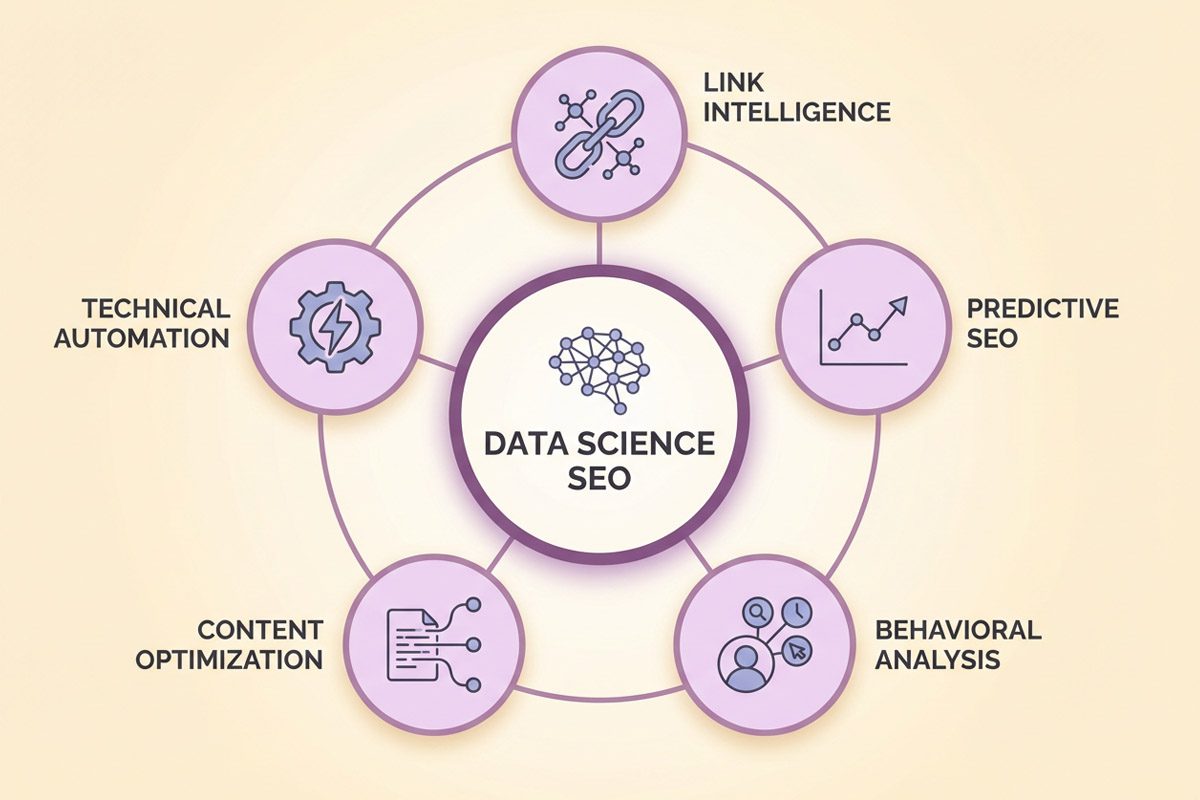
Specialized approaches address different optimization challenges. Multi-faceted expertise enables comprehensive methodology—predictive analytics for trend forecasting, machine learning for pattern recognition, NLP for content enhancement, and statistical analysis for performance attribution.
Predictive SEO
Predictive analytics analyzes historical data, seasonal patterns, and trend indicators to forecast traffic with 65-85% accuracy. One financial services client identified an emerging regulatory change six months before search volume peaked—content published early ranked #1 throughout the surge, capturing 80% of total search volume across related queries.
Customer Behavior Analysis for SEO
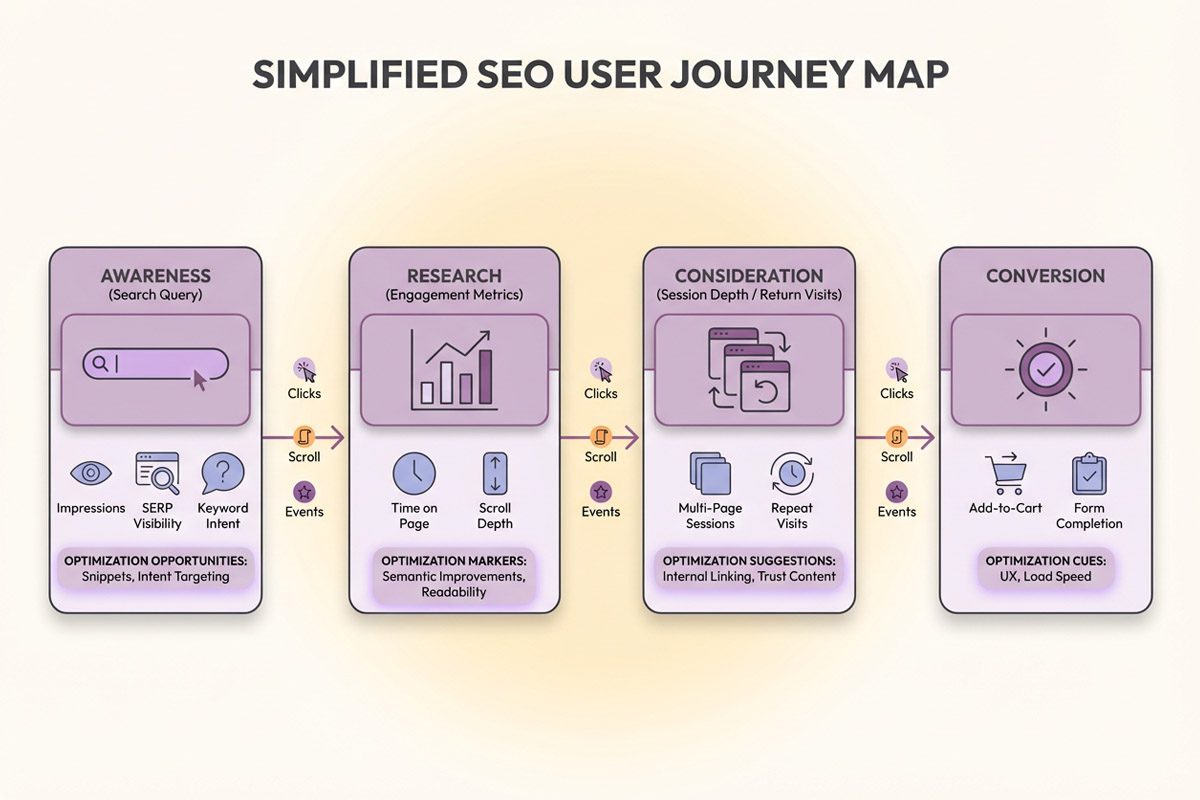
User behavior analysis connects web analytics behavioral data with search intent signals. NLP bridges behavior patterns with intent classification. One software company discovered that visitors from “how to” queries engaged deeply but rarely converted—insight that shifted content strategy toward comparison-intent keywords with better conversion characteristics.
Technical SEO Optimization Through Data
Methodical data-driven approaches solve technical issues systematically. Data analysis enables problem diagnosis, solution prioritization, and impact validation for technical SEO.
Monitoring and Measuring SEO Impact
Dashboard configurations track KPIs:
- organic traffic trends, ranking distribution,
- conversion funnel performance, and technical health scores.
Statistical analysis distinguishes correlation from causation—ensuring observed improvements reflect optimization actions rather than seasonal variations or external factors.
Real-Time Data Monitoring
Real-time monitoring systems enable rapid response to opportunities and issues. Custom alerts trigger when metrics exceed thresholds: sudden traffic drops indicate technical issues; unexpected spikes signal viral content or trend emergence. One e-commerce client received automated alerts when product page traffic dropped 40% overnight—resolution within hours prevented multi-day outages.
Challenges of Data Science SEO
Technical complexity presents the primary barrier—Python, statistical analysis, and machine learning require skills beyond traditional marketing backgrounds. Data quality issues undermine analysis when tracking implementations contain errors. Privacy regulations add compliance complexity to data collection.
Common SEO Data Science Challenges & Solutions:
| Challenge | Solution |
|---|---|
| Technical Complexity | Start with simple Python scripts, take structured courses, build gradually |
| Data Quality Issues | Implement cleaning protocols, validate data sources, establish quality checks |
| Privacy Concerns | Use anonymization techniques, implement GDPR-compliant frameworks |
| Tool Costs | Leverage open-source alternatives (Python, R), prioritize proven ROI tools |
| Skill Gaps | Focused learning paths, team training, strategic partnerships |
Organizations succeeding with data science SEO typically start small: one automated process, one predictive model, one technical implementation. Building capability incrementally reduces overwhelming complexity while demonstrating value that justifies further investment.
Future-Proofing SEO With Advanced Data Techniques
SEO and data science trajectories point toward increased AI sophistication, greater emphasis on user experience signals, and continued algorithm evolution favoring semantic understanding over keyword matching. Organizations adapting strategies now position for advantages as these trends accelerate.
Staying Ahead of Algorithm Changes
Monitoring systems track Google algorithm behavior through pattern recognition across hundreds of ranking signals. Organizations detecting algorithmic changes early implement corrections while competitors conduct diagnostic audits—speed differential creates recovery advantages that compound over recovery periods.
Conclusion: The Competitive Edge of Data Science in SEO
Transformative impact data science delivers stems from systematic methodology, statistical validation, and predictive capabilities traditional approaches lack. Predictive analytics forecasts trends months early, automation reduces manual workload 75%+, and machine learning reveals ranking patterns buried in datasets too large for human analysis.
Key Takeaways:
✓ Data science enables 20-45% performance improvements through evidence-based optimization
✓ Predictive analytics provides 3-6 month competitive advantages through early trend capture
✓ Automation reduces manual workload 75%+ while improving accuracy and scale
✓ Machine learning reveals hidden ranking patterns in large datasets
✓ Organizations adopting data-driven methodologies consistently outperform competitors
The future belongs to data-driven SEO practitioners. Search engines continue increasing algorithmic sophistication—organizations matching that complexity through data science gain sustainable competitive advantages.
Frequently Asked Questions
What is data science for SEO?
Data science for SEO applies statistical analysis, machine learning algorithms, and programming (Python, R, SQL) to extract actionable insights from search data. It transforms traditional intuition-based SEO into evidence-based optimization using predictive analytics, automated auditing, and systematic testing frameworks for 20-45% performance improvements.
How can data science improve SEO performance?
Data science improves SEO through predictive trend forecasting (65-85% accuracy), automated technical audits reducing manual work 75%+, NLP-powered content optimization, audience segmentation for personalized strategies, and data-driven prioritization ensuring resources focus on highest-impact opportunities. Statistical analysis distinguishes correlation from causation for smarter decisions.
What are the key differences between traditional SEO and data science SEO?
Traditional SEO relies on manual analysis, rule-based decisions, and intuition with limited scalability. Data science SEO uses algorithmic pattern recognition through machine learning, automated processing of large datasets, predictive modeling for proactive optimization, and systematic A/B testing—scaling efficiently while maintaining accuracy through statistical validation of every decision.
How do you start using data science for SEO?
Start with foundational data collection using Google Analytics and Search Console. Learn basic Python for automation (Pandas, Requests libraries). Apply simple statistical analysis (correlations, regressions) to identify patterns. Gradually implement predictive models for forecasting. Focus on one area (technical audits or content optimization) before expanding.
What are the types of data science SEO applications?
Key applications include: Predictive SEO (traffic forecasting, trend identification), Customer Behavior Analysis (journey mapping, intent classification), Content Optimization (NLP-powered semantic enhancement), Technical SEO Automation (crawl error detection, speed optimization), Link Building Analysis (opportunity scoring, quality assessment), and Real-time Monitoring (anomaly detection).
Can small businesses benefit from SEO data science?
Small businesses benefit significantly—free tools (Google Analytics, Search Console, Python) provide enterprise-level capabilities. Start with simple automation (technical audits, reporting), basic predictive analysis (Google Trends forecasting), and gradually expand. Data science democratizes advanced SEO through open-source tools.
What are common pitfalls when implementing data science in SEO?
Common pitfalls include: analysis paralysis (over-analyzing without action), poor data quality (garbage in, garbage out), overcomplicating approaches (starting with complex models), ignoring domain expertise (data without SEO context), neglecting testing (implementing without validation), and underestimating learning curves. Start simple, iterate based on results, balance technical rigor with practical execution.
 Share
Share
 X
X
 LinkedIn