






 1334
1334 


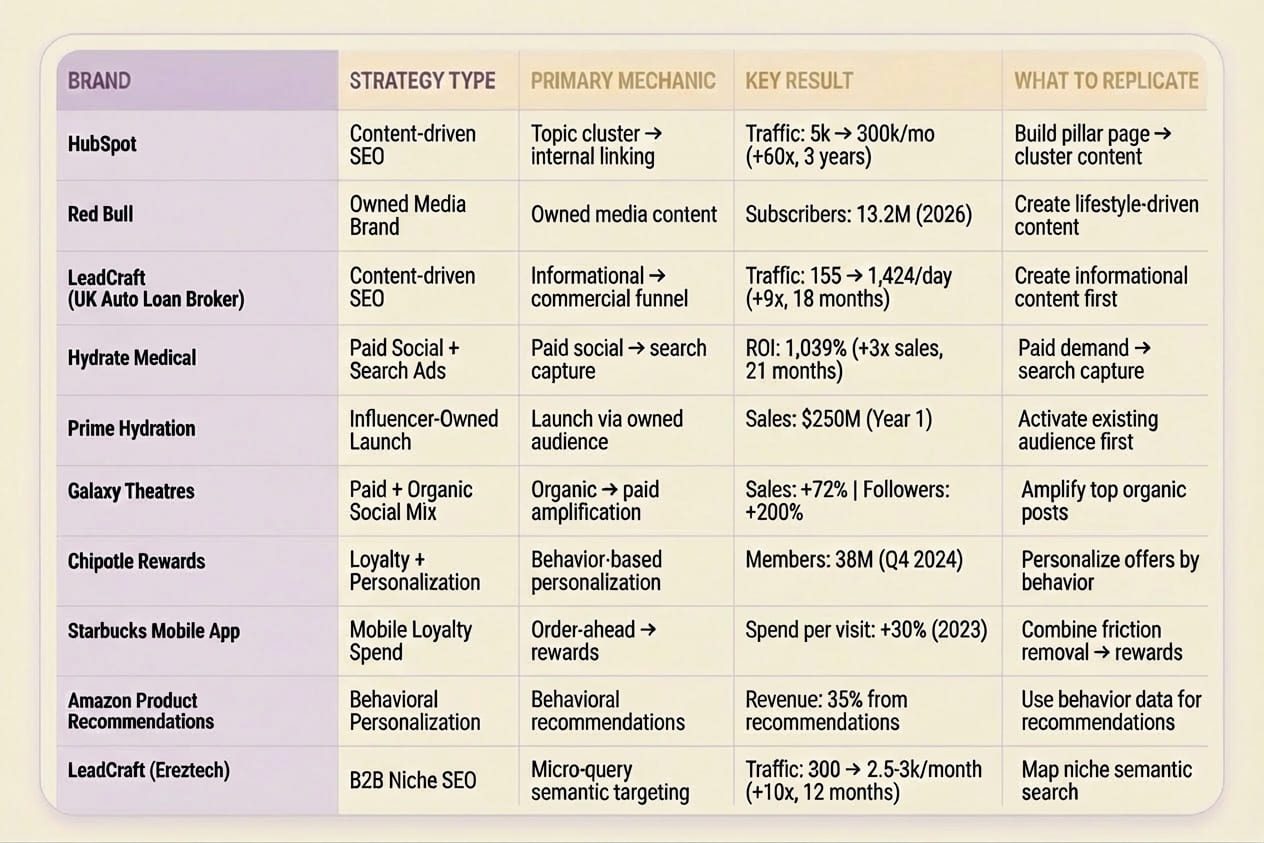
The 10 marketing strategy examples in this article span four strategy types — content-driven, social media, customer-centric, and B2B niche — each with verified data, a named mechanic, and a replication framework you can apply. Every example below answers the same question: what exactly did they do, and why did it produce measurable results.


Roman Slingov CoFounder & Head of SEO
Most clients come to us with tactics already running — PPC, social, content. They don’t work not because the tactics are wrong, but because the foundation is missing. It’s unclear who the customer is, why they buy, and what makes the company different from competitors. We always start with those three questions.
What Is a Marketing Strategy (vs. a Marketing Tactic)
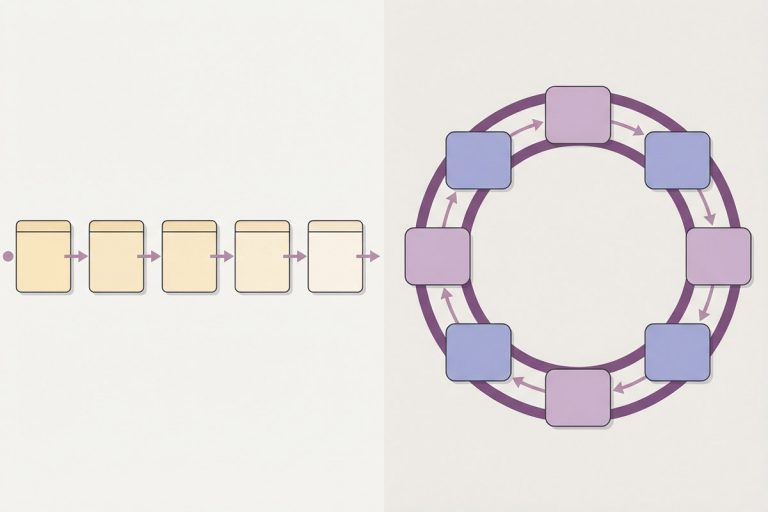
A marketing strategy is a long-term plan that defines target audience, value proposition, and channel mix to achieve a measurable business outcome — typically over 6 to 24 months. A marketing tactic is a specific action that executes the strategy, measured in days or weeks.
| Dimension | Marketing strategy | Marketing Tactics |
|---|---|---|
| Timeframe | 6–24 months | Days to weeks |
| Focus | Who you are + why customers choose you | What you do right now |
| Measurement | Brand equity, CAC trend, LTV | CTR, conversion rate, ROAS |
The distinction matters because companies that skip strategy and jump to tactics spend budget on activity that doesn’t compound. The examples below show what it looks like when strategy and execution are aligned.
Content-Driven Marketing Strategy Examples
Content-driven strategies use educational or entertainment value to build organic authority and reduce customer acquisition cost over time. The mechanic is always the same: create content that solves a specific problem for a specific audience, then let search intent and distribution do the work.
HubSpot — Topic Cluster Content Strategy (2016–2019)
- Strategy type: Content-driven SEO
- Mechanic type: Semantic authority clustering
- Outcome: Organic traffic grew from 5,000 to 300,000+ monthly visits in three years
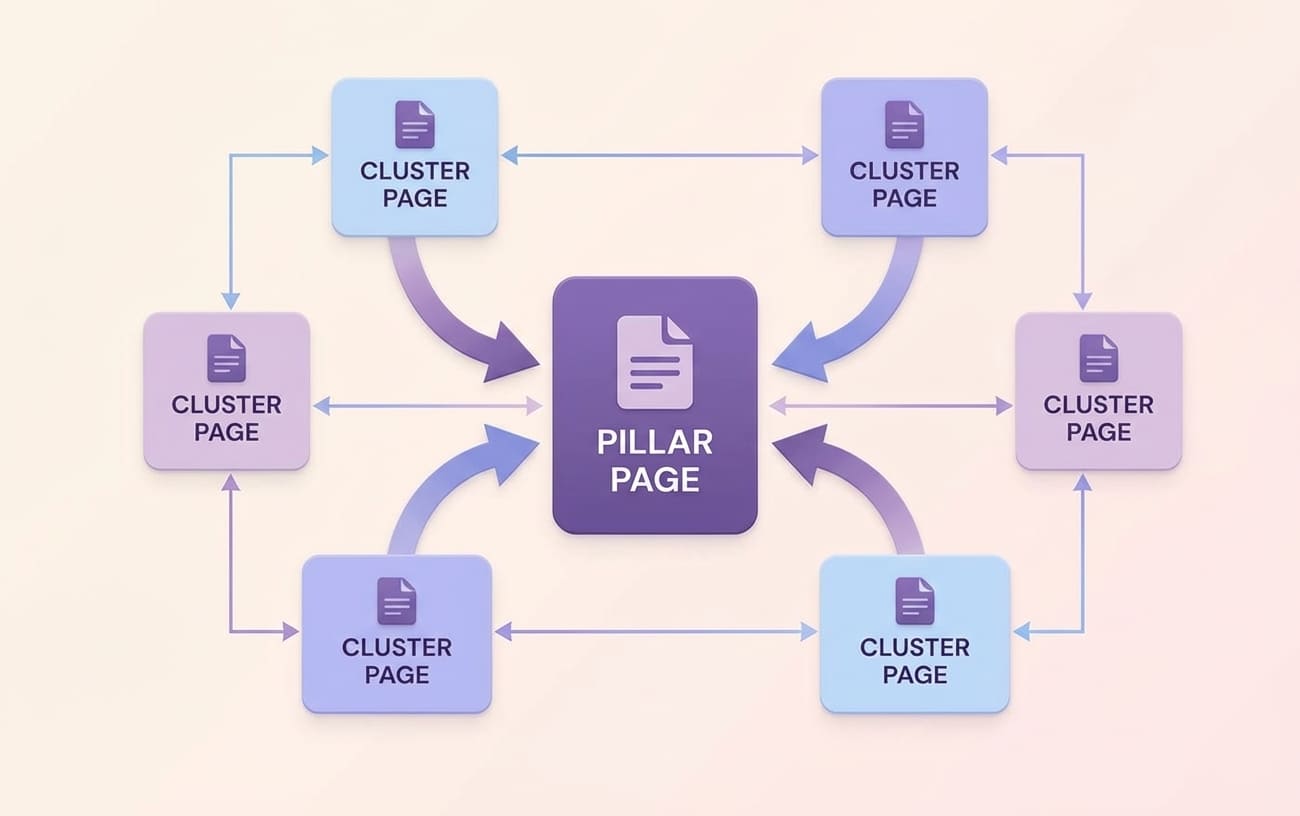
In 2016, HubSpot’s blog was publishing hundreds of posts without a coordinated structure. They switched to a topic cluster model: a central pillar page covering a broad topic at depth, surrounded by cluster pages targeting specific subtopics — all internally linked back to the pillar. The architecture signaled topical authority to Google rather than isolated keyword targeting.
After Google’s 2018 algorithm update rewarded semantic relevance over keyword density, HubSpot’s restructured content saw 20–60% organic traffic lifts across client implementations. The replicable mechanic: map your content to a single semantic cluster per pillar, link rigorously, and update the pillar page as the cluster grows.
Red Bull Media House — Owned Media Brand Strategy
- Strategy type: Content-driven brand building
- Mechanic type: Owned media brand building
- Outcome: 13.2 million YouTube subscribers (March 2026); Red Bull TV operates as an independent media property
Red Bull Media House, founded in 2007, produces extreme sports, music, and adventure content across owned channels — Red Bull TV, ServusTV, The Red Bulletin — with minimal direct product mentions. The content attracts the target demographic through shared values, not advertising interruption.
The result is a media empire that drives brand engagement without traditional ad spend. The replicable mechanic: define the lifestyle or interest your brand represents, then build content around that interest rather than your product. Audience retention builds brand identity more durably than campaign recall.
LeadCraft — Auto Loan Broker, UK (Informational Content → Commercial Traffic)
- Strategy type: Content-driven SEO, financial niche
- Mechanic type: Informational-to-commercial content funnel
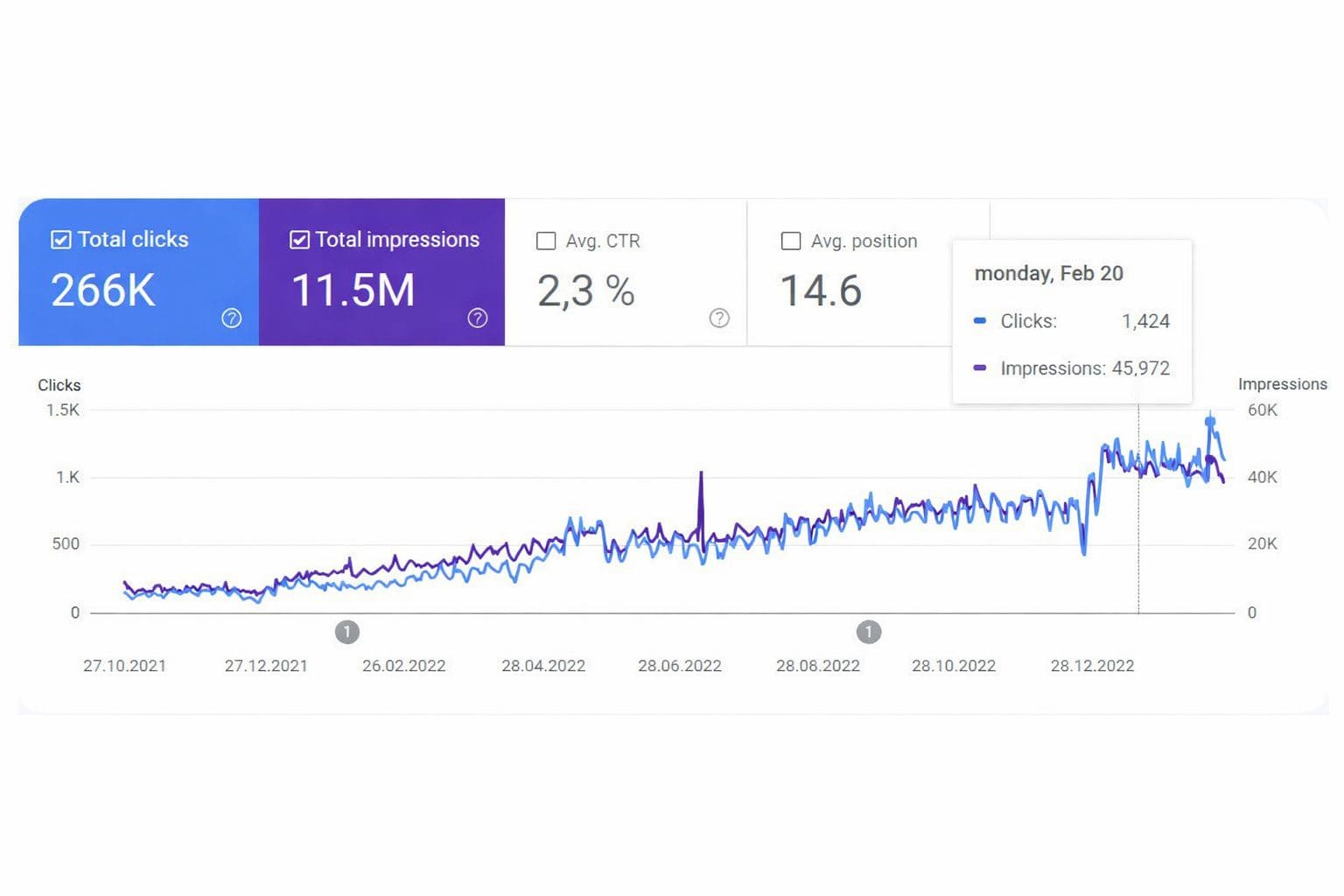
- Outcome: Daily traffic 155 → 1,424 (9x) over 18 months; blog 0 → 13,000 monthly visits; 500 target keywords in top-3 positions
The client, a UK auto loan broker, had a weak domain competing against established financial brands. Rather than targeting high-competition commercial keywords directly, LeadCraft built an informational content layer from scratch — a blog covering loan comparison guides, credit score explainers, and location-specific auto loan pages. Informational traffic built topical authority, which transferred to commercial keyword rankings.
The commercial search traffic grew 6x over the project period (3,595 visits in June 2021 to 21,604 visits in September 2022). The replicable mechanic: in competitive niches, use informational content to build domain authority before targeting conversion-intent keywords.
Social Media Marketing Strategy Examples
Social media strategies succeed when the platform mechanic — virality, community, or paid targeting — aligns with the campaign goal. The three examples below each use a different platform mechanic to drive measurable business outcomes.
Hydrate Medical — Paid Social + Google Ads (1,039% ROI)
- Strategy type: Paid social + search intent capture
- Mechanic type: Dual-channel demand generation
- Outcome: 1M+ impressions, 292,000 people reached, 3x sales growth, 1,039% ROI over 21 months
Hydrate Medical, an IV hydration clinic, partnered with Social Ape Marketing in October 2020 to replace organic-only efforts with a coordinated paid social and Google Ads campaign. Social ads built awareness and demand; Google Ads captured search intent from users already looking for IV hydration services. The combination produced over 1 million impressions reaching nearly 292,000 people by July 2022.
The replicable mechanic: use paid social media to create demand, then use search ads to capture the intent that demand generates. The two channels amplify each other when run simultaneously.
Prime Hydration — Influencer-Owned Launch Strategy
- Strategy type: Influencer-first product launch
- Mechanic type: Owned audience product launch
- Outcome: $250M in retail sales in the first fiscal year; #2 hydration brand in the US behind Gatorade
Prime Hydration, co-founded by Logan Paul and KSI in 2022, launched with no traditional advertising budget. Instead, both founders activated their existing social media audiences — combined reach in the hundreds of millions — through organic content and viral challenges. Distribution followed demand: retailers stocked Prime because consumers were already asking for it.
The replicable mechanic: if you have access to an audience (owned newsletter, social following, community), launch directly to that audience before investing in paid acquisition. Demand-pull distribution is faster and cheaper than paid-push advertising at launch.
Galaxy Theatres — Paid + Organic Social Mix
- Strategy type: Blended paid and organic social
- Mechanic type: Paid-organic content flywheel
- Outcome: +72% ticket sales, +200% Instagram followers, +400% likes
Galaxy Theatres worked with Bright Age to build a social strategy combining paid campaign amplification with consistent organic content. Organic posts built community and familiarity; paid campaigns amplified the highest-performing organic content to wider audiences. The two worked as a flywheel: organic engagement lowered the cost per result on paid, and paid reach fed the organic following.
The replicable mechanic: identify your strongest organic content, then allocate a paid budget to amplify it rather than creating separate ad-specific content. Authentic content outperforms ad-specific creative in social environments.
Customer-Centric Marketing Strategy Examples
Customer-centric strategies use behavioral data and personalization to increase repeat purchase rate and customer lifetime value. The mechanic in each case below is the same: use transaction or behavioral data to make the next interaction more relevant than the last.
Chipotle Rewards — Loyalty + Personalization at Scale
- Strategy type: Data-driven loyalty personalization
- Mechanic type: Purchase-data personalization loop
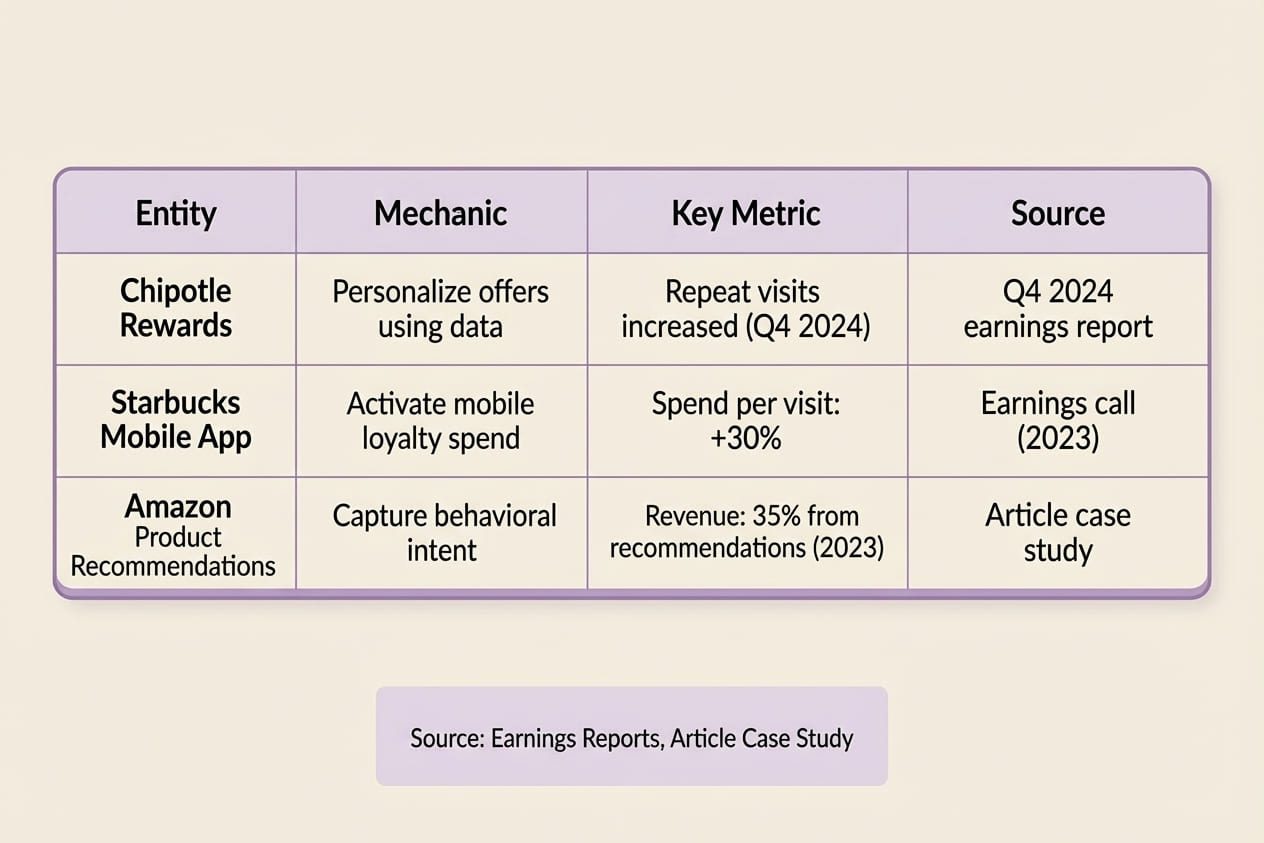
- Outcome: 38 million Rewards members as of Q4 2024; increased repeat visit frequency and revenue per customer
Chipotle Rewards, built with Adobe’s personalization tools, delivers promotions based on individual purchase history rather than broad segments. A customer who orders bowls gets bowl-specific offers; a customer who hasn’t visited in 30 days gets a re-engagement offer. Each interaction is informed by prior behavior.
The replicable mechanic: segment your loyalty program audience by actual purchase behavior, not demographics. Behavioral triggers (first purchase, lapse, high-frequency) outperform calendar-based promotions in repeat purchase rate.
Starbucks Mobile App — Mobile Loyalty Spend Activation
- Strategy type: Mobile-first loyalty
- Mechanic type: Mobile loyalty spend activation
- Outcome: App users spend 30%+ more per visit than non-app users; sustained engagement lift across all customer touchpoints
Starbucks’ mobile app combines order-ahead functionality with a personalized rewards system. Offers are tailored based on order history and visit frequency. The app removes friction from the transaction (no waiting in line) while delivering personalized incentives (bonus stars on your most-ordered drink).
The replicable mechanic: reduce the effort required to complete a purchase while simultaneously increasing the perceived value of completing it. Friction removal and personalized incentives together produce significantly higher spend per visit than either alone. (Source: Starbucks earnings calls, 2023)
Amazon Product Recommendations — Behavioral Intent Capture
- Strategy type: Behavioral data personalization
- Mechanic type: Behavioral intent capture
- Outcome: Amazon’s recommendation engine generates 35% of total Amazon revenue
Amazon’s recommendation engine analyzes individual browsing history, purchase history, and product affinity patterns to surface relevant products at every touchpoint — homepage, product pages, checkout, and post-purchase emails. The system anticipates purchase intent before the customer has articulated it.
The replicable mechanic: map your customer’s behavioral journey and identify the moments of highest purchase intent. Deliver relevant product or content recommendations at those moments rather than relying on customers to navigate to what they need.
How to Build a Marketing Strategy That Works
Roman Slingov CoFounder & Head of SEO
The most common mistake in marketing strategy is confusing the channel with the strategy. ‘We’ll do LinkedIn’ is not a strategy. A strategy is understanding what stage of the decision process your customer is at, and what they need to think, feel, and do after every interaction with your brand.
Five steps that appear in every effective marketing strategy, regardless of industry or budget:
- Define target audience persona — not demographics, but decision triggers. What problem prompts them to start looking? What objection stops them from buying?
- Map your value proposition against the competitor gap — what do you offer that competitors don’t, and which customer segment values that difference most?
- Select primary channels based on audience behavior, not trends — where does your customer actually make purchase decisions? That’s your primary channel.
- Set campaign KPIs tied to business outcomes — customer acquisition cost, customer lifetime value, or pipeline value. Not impressions or followers.
- Build your measurement framework before launch — define what success looks like at 30, 90, and 180 days before spending the budget.
LeadCraft — Ereztech B2B Niche Case (Strategy in a 50-Client Global Market)
- Strategy type: B2B niche semantic depth
- Mechanic type: Niche semantic depth strategy
- Outcome: Traffic 300 → 2,500–3,000 monthly visits (10x); 90% of product pages in Google top-10; 7x lead growth; 8x unique user growth
Ereztech, a US specialty chemical manufacturer, had a total addressable market of approximately 50 potential clients globally. Standard keyword research tools (Ahrefs, SEMrush) returned minimal volume for the niche — the queries were too specific to appear in standard databases. LeadCraft conducted in-depth semantic analysis to surface hundreds of micro-frequency converting queries: catalog numbers, technical synonyms, SKUs, and industry-specific product names.
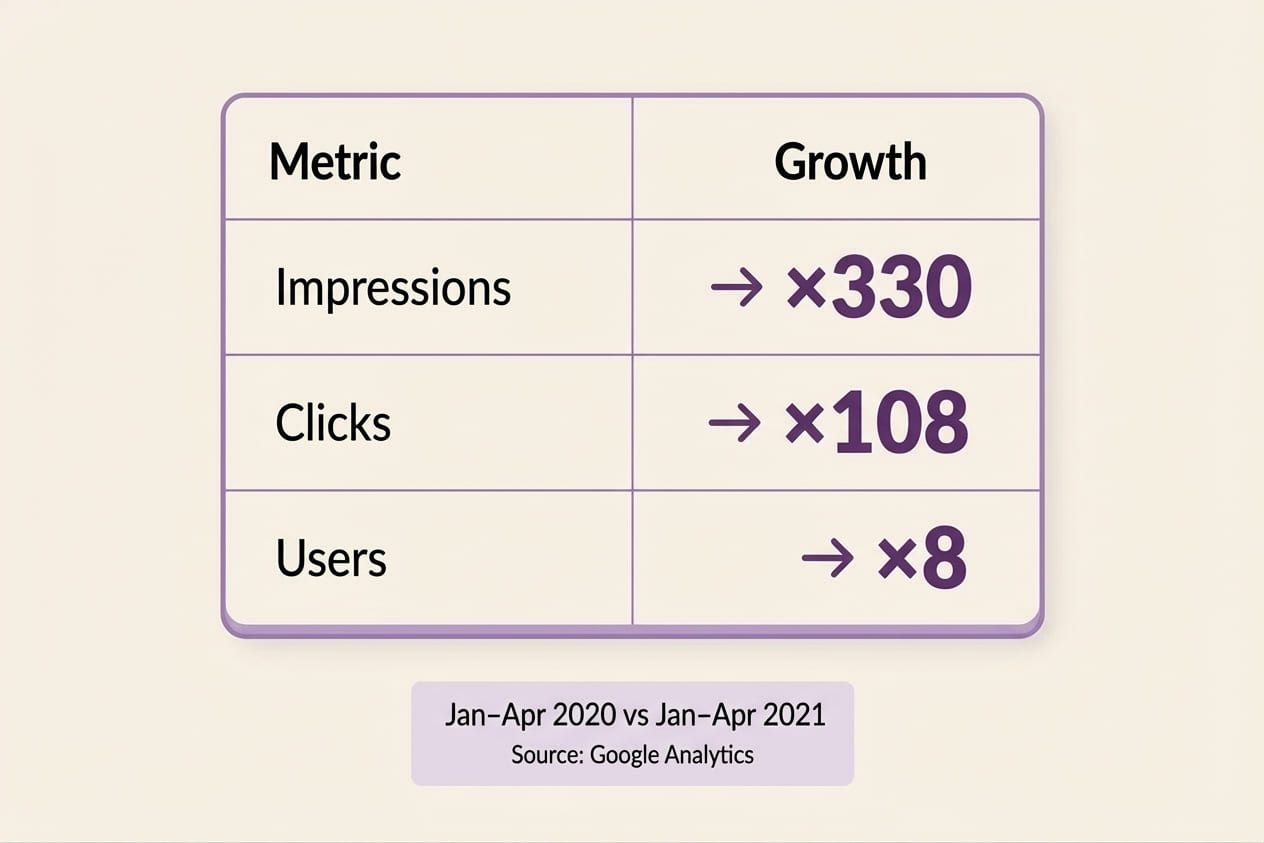
Within one year, 90% of Ereztech’s product pages reached Google top-10. Comparing January–April 2020 to January–April 2021: impressions grew 330x, clicks 108x, unique users 8x. The replicable mechanic: in niche B2B markets, standard keyword tools undercount real search demand. Manual semantic research that maps how specialists actually search for products produces higher-intent traffic than volume-based keyword targeting.
Marketing Strategy Performance Metrics by Type
Brand and marketing are not competitors for budget. Brand defines what the company believes. Marketing delivers that to the right people at the right moment. When they’re misaligned, you spend money attracting people who were never going to buy.
| Strategy type | Primary metric | Secondary metric | Realistic time to results |
|---|---|---|---|
| Content-driven | Organic traffic growth rate | CAC reduction over time | 6–18 months |
| Social media | ROAS / campaign ROI | Follower growth rate | 1–3 months |
| Customer-centric | Repeat purchase rate | Customer lifetime value (LTV) | 3–12 months |
| B2B niche SEO | Qualified lead volume | Pipeline value attributed to organic | 6–12 months |
FAQ
What is the most effective marketing strategy for B2B companies?
Content-driven SEO combined with deep semantic targeting is the most effective long-term B2B marketing strategy for sustainable lead generation. LeadCraft’s Ereztech case demonstrates 10x traffic growth and 7x lead increase in a niche with only 50 global clients, achieved by targeting micro-frequency queries that standard tools miss entirely. Realistic time to meaningful results is 6–12 months.
Which marketing strategy example has the highest ROI?
Hydrate Medical’s paid social and Google Ads strategy delivered a documented 1,039% ROI over 21 months, verified in Social Ape Marketing’s published case study. Influencer-owned launch strategies like Prime Hydration can deliver near-zero customer acquisition cost at launch, but require an existing owned audience as a prerequisite.
How long does a content marketing strategy take to show results?
HubSpot’s topic cluster strategy produced 60x organic traffic growth over three years. A more typical timeline: 6–9 months for initial keyword ranking traction, 12–24 months for compounding organic traffic growth that meaningfully reduces paid acquisition dependency.
How do you measure the success of a marketing strategy?
Primary KPIs should be tied to business outcomes, not activity metrics. Content strategies measure organic traffic growth and CAC reduction. Social strategies measure ROAS and pipeline generated. Customer-centric strategies measure repeat purchase rate and LTV. Impressions and follower counts are secondary metrics — they indicate reach but not commercial impact.
 Share
Share
 X
X
 LinkedIn